The third place

| No TrackBacks

I encountered this Wikipedia article when writing about Facebook for a book I'm working on: The Third Place. I'm fascinated by this concept, and I have to admit that this is the first time I've given the subject much thought. I do not have a third place, and I think that this is a problem for me. So how do I solve it?

For many people, the "third place" is a church. I'm not religious and I never will be (again). Even Unitarianism doesn't particularly appeal to me. So that's out. But for a while when I was a teenager, church was the place to be. I get it; this is a community center more than a place of worship, but I do not enjoy the atmosphere, the cost, the time commitment, or the idea of lying/hiding my non-belief.

Later in my youth, my third place was a 24-hour coffee shop. It's where all of my friends were, and where every plan started. I don't think there are any places like that around here, and if there are, they attract vagrants and other people I don't want to associate with.

When I quit the coffee shop, I joined a Masonic lodge. That wasn't nearly as good as the coffee shop in terms of meeting people my age and getting into adventures, but it had far less teenage drama. Still, it was a place to meet socially and do something. Meetings were only twice a month, though, which isn't really often enough to be much of a third place.

When I moved to Sarasota, the third place was related to motorcycles; it was a combination of a friend's house, and the Hooters franchise where there was a weekly bike night event. I don't have a motorcycle currently, so I can't really participate in the local bike nights here.

In Orlando, I didn't really have a third place, and I think that was the beginning of some unusual problems. I was on Slashdot when I worked at OSTG, and that was my third place for a while, then Digg, and then Reddit after that. My third place became digital. At some point in 2011 I realized how harmful it was that I was so involved in the daily drama of Reddit, and I ceremoniously deleted my account. World of Warcraft was my third place for a while, too, and it's much easier to get into the notion that it's a "place" because of the 3D nature of the game environment. There were just too many jerks, though -- too many people who took the game far too seriously and demanded top-level performance and job-like dedication from casual players. And then the company that maintains the game destroyed it with the Cataclysm expansion. Like, literally destroyed the world they spent years creating; it was no longer familiar. That was an exceptionally stupid move, it marked the beginning of a decline in Warcraft participation, and years from now sociologists will use it as a case study in "digital third place destruction." I no longer have a digital third place, and I don't want one.

Now I am in Arizona, where most people are religious. As a result, there are a lot of churches here. It's often the first question people ask when you meet them: "What church do you go to?" Much as I enjoy atheist activism, I also realize it's a bad idea if my neighbor thinks that I am an evil force in the universe that is better off dead because I don't believe in the same fairy tales that he does, so I avoid the subject by saying it's a personal matter that I'd prefer not to discuss.

I thought about joining a Masonic lodge here, but the rules are different than in New York; in Arizona, you must believe in the Christian god, whereas in New York you were only required to believe in a "higher power" of your own interpretation. For many years I have hoped that the Masons would evolve beyond their bizarre hatred of atheists, but it's just too conservative an organization for that. The Masons will never change. That's why they're dying out. It's a fraternity based entirely on ancient traditions; it cannot change without becoming something different.

So, I thought, maybe there is another fraternity for me. Fraternal Order of Eagles or Moose International or whatever. They all have similar requirements, though, and I'm sick of hanging out with a bunch of old men. Old men are interesting sometimes, but I don't want my third place to be filled with them anymore. When they all joined, fraternities were something for men of all ages, but younger men have for the most part stayed away from these organizations, which leaves them filled with elderly members. Also -- and I know this isn't a very nice thing to say -- I am not interested in volunteering or charity participation. I've tried both in the past, and it's not been rewarding or enjoyable for me.

I want a symposium, in the Platonic sense. Or an Agora. Someplace where cool people gather to discuss cool things without the threat of screaming children, douchey player-types, or disapproving glances from the elderly who want to know whose kid I am. (Someone in my old Masonic lodge actually asked me that at an event.) So I think it's time for new ideas. My first job was at a country club; I was a caddy, then I got a more regular job in the bag room. I never was much into golf, but the place where I worked had quite an active social atmosphere. There were dinners, parties, and card games. I had no access to any of that as an employee, but I always thought it looked like a good time. Again, though, it was a bunch of people over the age of 60.

I've been thinking lately that a country club like that might be a good option for me in terms of a third place, assuming a more diverse membership. There are many country clubs in this area. Some are strictly golf courses, but the ones that have more than just golf usually offer some form of reduced membership to those who are only interested in the other amenities and services. So I'm going to check out a few of them and see if they're worthwhile. Beyond that, I don't know what other non-religious options are available.

The Hero

| No TrackBacks

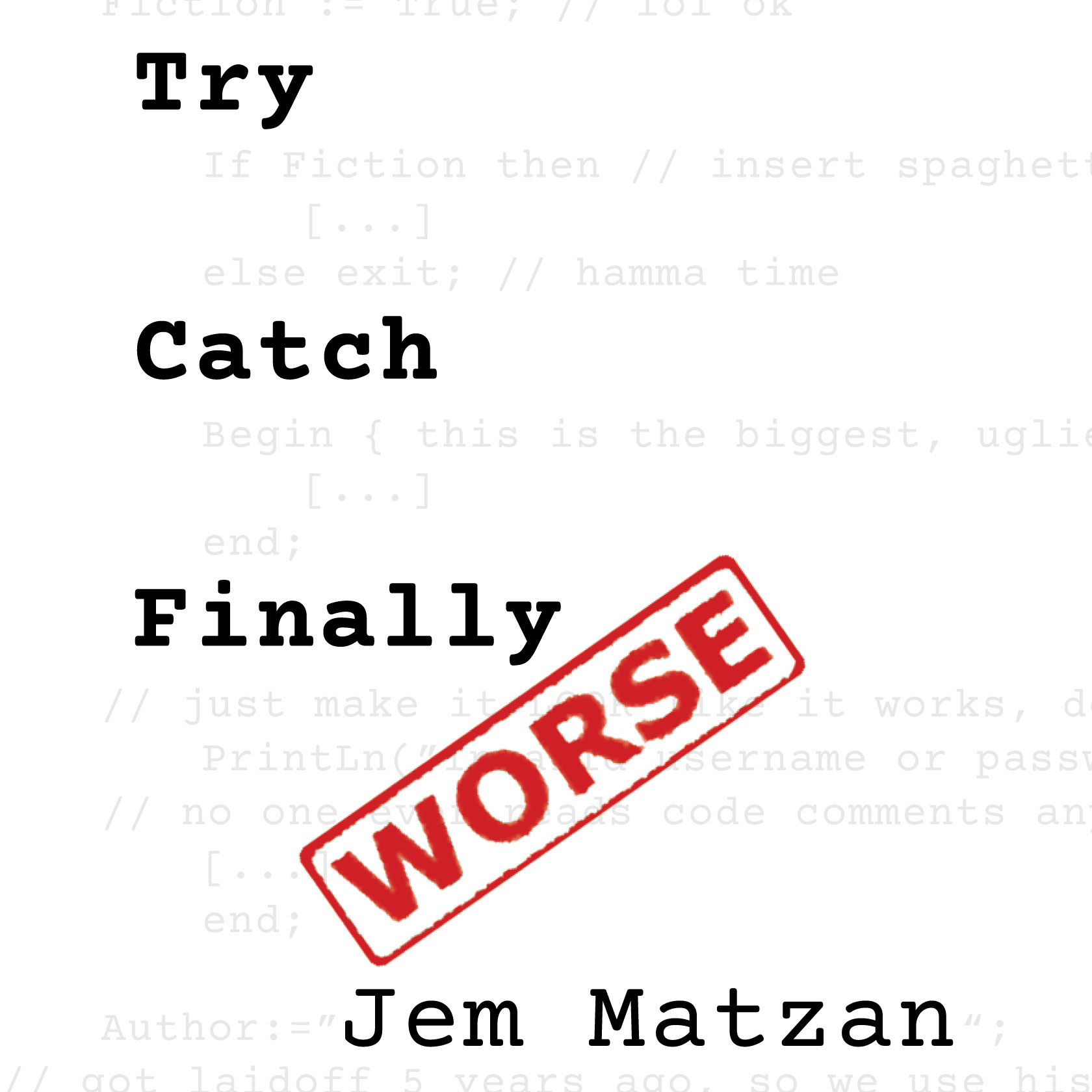
From about 1999 to 2002, I worked on a book called The Hero. It changed formats several times, from short story to screenplay to novel. I messed with the characters and the ending a lot, and finally settled on something that I thought was exciting, interesting, funny, and innovative.

Actually, it kind of sucked. It ended up being somewhat juvenile, like a cheap summer action flick. Even cheap summer action flicks have fans, and they do make money, but some people grow out of the guns-and-explosions genre and want something more engaging and relatable. So after a few years, I started to be embarrassed by The Hero because to me it was no longer all of the things I'd designed it to be. I also had written another book, The Search For the Emerald Blackbird, and improved my skills immensely in the process. By the time I was done writing the second book, The Hero looked like the first pancake.

I've spent the intervening 11 years writing professionally in a variety of different roles and mediums. I've adopted and abandoned styles and habits until the challenge became the style of no style and the habit of breaking habits. I've learned that big words are a pretentious waste of time, that long descriptions distract from a good story, and that everything we collectively think of as being a "classic" is merely a reflection of the times and should never be imitated. Our language is different now, and we expect books to contain less poetry and more action.

To curb my embarrassment, I started rewriting The Hero in 2005. I figured I would write a better beginning and a better ending, and edit the middle. So I wrote a pretty good beginning, and from that I realized that the whole story needed to be scrapped. So I deleted the rest of it and carried on from that rewritten beginning. At some point I got involved with other projects and ideas, and didn't return to The Hero until I learned of the Amazon Breakthrough Novel Award in 2008. I decided to rededicate myself to continuing the rewrite. I took a look at the "new" beginning from 2005 and realized that I could do better than that, so I deleted everything I'd done previously and started over again.

I did not finish the manuscript in time to enter the contest, so I put it aside again for a few weeks, thinking that I had a whole year to complete it for next year's contest. 2009 came around and while it was closer, it still wasn't finished. In 2010, I thought I could plow through the story, and made some progress, but in the end I realized that rushing through the project would only result in a bad book again. I switched my goal to 2011 instead. I intended to dedicate every free moment, starting in September, to completing the book by the end of the year. Then a failed romance distracted me and rendered me unable to focus on my work. "2012 is it," I said to myself, "This is the year I complete the book." I took time off to go to Key West for several days to do a writing marathon, I dedicated certain evenings and weekend days to the task, and when the last two months before the competition came, I took two weeks off of work so that I could complete The Hero in time for the contest. Halfway through that effort, the contest closed early because the maximum number of entrants had been reached before the entry deadline.

I quit my job a few months later, and used my newly-acquired free time to finally complete the second edition of The Hero. The problem was, I had taken it in a different direction than I'd planned, and there were a lot of new characters that had to be introduced earlier, and some characters were just sketches and had to be made more distinctive. I spent the next three months doing a complete, word-by-word edit. I caught a lot of mistakes, a lot of loose ends, and added two minor characters near the end of the book. But it still wasn't good enough, so I spent another month going line by line, sometimes reading the book out loud to myself so that I could make sure that my language wasn't locked into a literary alternate reality.

With the 2013 contest just a few months away, I had time for one more edit. I took more time off of work at my new job and completed the edit, then I completed the cover design, and self-published it through Createspace and Kindle Direct Publishing. I wrote an outstanding pitch and isolated the first 4700 words for the excerpt, which is how the contest is judged in the first two rounds. Then I waited until the contest opened and was among the first rush of people to submit a book.

And that's the story of how I rewrote my first novel. I've read through parts of it here and there since it was published in January 2013, and I still think it's good. It did everything I wanted it to do. The book was eliminated in the second round of judging in the Amazon Breakthrough Novel Award because the excerpt didn't satisfy one of the two judges assigned to me. I knew that would happen. The Hero doesn't have a traditional "hook" to keep readers interested in an otherwise mundane story. Instead, the hook is the whole story. It starts with great characters doing something interesting, and just keeps going forward.

Anyway, it's only $4 for the Kindle edition (or free through the Kindle Lending Library if you are an Amazon Prime member), and $12 for the trade paperback edition. That's my sales pitch. I hate marketing.

Streaming music options

| No TrackBacks

I didn't renew Pandora because it works on too few devices that I own, and I'm not happy with the way the selection algorithm works over a long period of time. I tried Music Unlimited on the PS3, but it's overpriced, under-featured, has very little music that I actually like, and only works on the PS3. I took a quick look at Grooveshark, but it doesn't have much of a selection, either. It's either crappy rap-pop or classic rock or nothing.

I am seriously considering a lifetime membership to Magnatune, since it's all new music and has a huge selection of interesting genres. The downside is device support. Works on Android and through a browser, but no PS3 support. The free streaming service is crap because it puts a constant "magnatune!" audio message in the background that prevents you from enjoying anything you're listening to. I miss the older service build into Linux media players.

Just as I was thinking that I need to take another look at other streaming services, SiriusXM sends me like the 100th junk mailer begging me to sign up. I was about to throw it out when I realized that it said on the envelope that it had enabled a free trial on my Sirius radio. It took me a moment to realize that I actually have Sirius functionality in my Mustang. I opened it up and it's a no obligation 3-month trial subscription. It just works for three months, no information collected or signup required. So hey, why not?

I don't have a good opinion of Sirius. In fact, it's almost identical to my opinion of satellite television services: it's expensive and has a ton of programming that I will never consume. I am not a sports fan and I absolutely loathe talk radio. As an added negative, Sirius is widely known as the home of the exceptionally boring Howard Stern. Wherever Stern is, I do not want to be. He's the Nickelback of talk radio -- clearly he is popular enough to have a show, but it's hard to respect anyone who openly admits to listening. Do you notice that people always have an excuse or a disclaimer for listening to Stern or Rush? "Eh, well, yeah, I just listen for the... uh... interviews. Don't judge me."

Anyway, as I was looking at the price plans and laughing to myself that I would never pay for this, I walked face-first into the SiriusXM online streaming service. It has an Android app, a good browser app (Flash-based, but not as horrid as Pandora's buggy Flash site), and it's only a tiny additional price beyond the normal radio service. In fact if I wanted to tack it onto my 3-month free trial, I would only have to pay about $6. That's far more reasonable than I was expecting, though it amounts to around $15 per month overall, including the core service. Doesn't work on the PS3, but then again, nothing except Music Unlimited works natively there anyway. I'm really getting sick of limited service/app support on the PS3.

The thing is, SiriusXM's radio channels are awesome. I've been listening to the 80s station (channel 8) all day, and I'm shocked by how good it is. I have not heard the same song twice, and I'm actually hearing songs that I heard on the radio in the 80s -- not the crap that current "classic rock" stations play, which amounts to the 20 songs that were cheapest to license this quarter. I turned it to the movie soundtrack channel and heard high-quality movie scores that I hadn't heard through Pandora.

As much as I abhor monthly fees, I might have to do this. Damn their high-quality service and excellent marketing.

Update

While I do like the SiriusXM service, the support is horrible. Try to find anything good about SiriusXM customer support online. I dare you. Even the employee responses on consumer review sites admit that there are problems. Specifically, it seems that there aren't any "support" people, there are only "sales" people who try to upsell radios and upgraded services every time you have a problem. The difficulty I'm having, though, is getting through to someone who can solve a simple login issue.

The activation for the trial subscription in my car couldn't possibly be easier. There's zero obligation to continue, and I don't have to call and cancel anything. The radio stations are awesome and the quality of the sound is pretty good. So I figured I'd try the online streaming as well -- as mentioned above -- but that wasn't quite so simple. While it was easy to sign up for a 7-day free trial, it was difficult to keep it working for the duration. On day two, my login no longer worked. So I emailed SiriusXM support, and got a response about a half a day later saying that I should check the spelling of my username and password.

Really? Are you going to tell me to make sure it's plugged in and turned on as well? I mean, my credentials were saved in the browser (I clicked "Remember me" in their Flash app) and I did not change the auto-generated password. But I needed to follow their instructions in order to continue, so I tried resetting the password and trying an ALL CAPS username, but nothing worked. I emailed back and explained that I'd tried their solutions. The rep replied a few hours later saying that it looked like I didn't have a trial account for the Internet Radio service. That's ridiculous; I have the welcome email right here, and I was actually listening to it on my computer and my Nexus 7.

The only two options available to me, according to the latest SiriusXM support rep communication, are to tack on the $6 charge to my 3-month car radio trial account, or to sign up for a 30-day free trial of Internet Radio. Both options involve giving them my credit card information and agreeing to automatically bill at the end of the trial. I might be okay with that if I knew that I could get in touch with customer service and resolve the problem quickly and correctly, but in the four interactions I've had with the SiriusXM people, they have been totally incompetent and dismissive. Combine that with the literally thousands of negative reviews and complaints on the Web, and I'm now completely discouraged from signing up for anything with SiriusXM.

And that's how bad customer service loses sales. I think this is an awesome service, but I am absolutely certain that if I sign up for it, I am going to have a lot of frustrating problems with billing and customer service. Why would I want to subject myself to that?

Frustrated with SiriusXM, I went once more into the breach to look for other streaming music options that I hadn't considered. I was aware of Spotify before, but I was turned off by it because it was "invitation only," which is something I truly hate. "If you don't get an invitation, then you're not popular enough for our service! Isn't 6th grade marvelous?" Yes, I understand that it's to limit incoming traffic so they can ramp up without the whole service crashing or becoming too slow to use, but there are better ways to go about this (like a lottery system, or a first-come-first-served signup process that activates over time).

Anyway, anyone can sign up now and I took a look at their free trial. I'm just as impressed with it as I was with SiriusXM. It actually is a better service for the desktop computer and Nexus, but I'm not going to waste my data plan streaming music to the car stereo (though actually, if I did that and increased my data plan, it would probably be cheaper than the SiriusXM service just for the car. Hmm...), and there isn't a valid Playstation 3 option either. Much as I like the PS3 for other things, the music service limitations are so horrible that I can't see myself buying any more Sony products. This is what happens when the same company that makes the hardware also competes in the music licensing industry.

My stupidphone stopped working last Saturday morning; the keypad had become intermittent. I tried all the usual tricks -- restarting, removing the battery, reseating the SIM, cleaning the contacts, blowing out the internals with Perriair, but nothing worked. Since I had an important phone interview on Monday, I had no time to shop on the T-Mobile site. I had to go out and buy a phone in person.

Since my carrier is T-Mobile, my instinct was to go to one of the many local T-Mobile stores to shop for a phone. Had I thought more deeply about it, or done more research, I would have considered other, possibly better options such as Best Buy and Wal-Mart.

My expectation was to pay somewhere between $75-$175 for a new stupidphone. I do not want a smartphone; I have a netbook and a tablet and a low-cost non-contract talk/text plan that I like. I have no use for a smartphone with a minutes-long battery life and features I can't use because I don't want or need a data plan. I need, above all, a phone, not a game system or a portable computer. I can't have a device that needs to be charged every 8 hours in order to talk on it.

So I walked into the T-Mobile store, which was empty except for three employees, and shook hands with the first person I saw. This happened to be the manager. "My phone died, and I need to replace it. I don't want a smartphone, I just want an ordinary, old-style phone that does voice and text. Nothing else." He kind of smirked at me, then called over to a salesman who bore a striking resemblance to Jabba the Hutt due to an unfortunate accumulation of neck fat combined with a shaved head. With a slight hint of sarcasm, the manager shouted my unreasonable expectations across the room to him as if issuing a challenge.

Jabba waddled over and shook my hand. "I don't need a smartphone," I reiterated. "Hoo-hoo-hoo-hoo, your Jedi tricks don't work on me, boy," I imagined him replying.

I was marched over to the ghetto section of the store where "economic" options were embarrassingly displayed. I was shown three options: a low-end smartphone with a pull-out keyboard for $250, a Samsung flip-phone that got great reviews for $130, and a Huawei piece of garbage that nobody ever buys for $100. Now I know how this works psychologically; I am supposed to be drawn to the middle option, which is itself overpriced, merely because my other two options are clearly unreasonable. However, $130 was within my budget, I liked the Samsung phone, and it was a brand I trusted. Just as I was finalizing my decision internally, Jabba motioned to the middle-class section of the Wall of Phones and mentioned that there were better phones there that had amazing options and good battery life.

I decided to humor him, since I wasn't quite ready to face the Rancor unarmed. He showed me a fancy new Nokia Lumia with Windows on it. "Mmm," I replied, "Very fancy." He proceeded to slip into his sales pitch, slithering further and further down the Wall of Phones until we were in the Donald Trump section. I have literally purchased working automobiles for less money than some of the phones he was showing me, and yet all I needed was to make phone calls and occasionally send text messages. Simply this and nothing more.

Then on to Android devices. "This one does HD video," he said, showing me a clip from The Avengers. "And," he continued in my imagination, "it serves drinks on my pleasure barge." I fiddled with the menus to feign interest. "Mmm," I replied, "Very fancy. But you see, I have a tablet that does all this, and I never do any of that on it. I just need a phone." I walked over to the ghetto section and pointed at the Samsung flip-phone. "I'll take that one."

Jabba shifted uncomfortably. "Why would you want that? Why would you pay that much money when you can get something better for free on a contract?"

I looked him in the eyes. "As I've explained, I just need a new phone. Don't want a smartphone. I want a stupidphone."

He whipped out a sheet of paper that had a grid with service contracts on it. "If you get the Windows phone that you liked over there, and sign up for a 20-month contract, we'll waive the activation fee and you can walk out of here today with this..." he unboxed a brand new Lumia and handed it to me. I gave it a cursory glance and said, "Mmm, yes, very fancy. Not interested." I handed it back to him.

"Well I guess we can put you on just a regular talk and text contract, if you really want that phone..."

I held up my hand to stop him. "Wait. I don't need a contract. I'm already on a T-Mobile plan that I like, and I don't want to switch. Look... I just want to take this phone," I showed him my old broken one, "And replace it with something that works. That's all. Nothing else."

Jabba the Hutt narrowed his wormy gaze. "I don't think we can do that."

I made no attempt to hide my shock. "What? Why?"

"Those phones there are for contracts only. For what you want to do, you need to buy one of the prepaid phones." He walked over to a small rack in the corner that had many boxes of three different phones displayed such that it looked like there were nine, but in fact it was just those three on different hooks. It took me a moment to realize that. The good news was, they were comparable to the ghetto phones. I selected the Samsung again, for $80 this time. "I'll take this one."

"Hmm," he said without enough actual concern to convince me of his sincerity, "I don't know if we can do that one. You might need to get this one," he pulled down the most expensive prepaid phone, which was a $150 smartphone. "Let me check," He walked into the back room and closed the door. It was at that moment that I realized that the manager was gone, and Jabba was going into the back to find him.

I awaited his return patiently. When he came back, he gave me a completely non-genuine look of apology and said that the only way it would work is if I bought the most expensive prepaid phone. Alternatively, I could bring him Solo and the Wookiee.

Most people would have given in by this point and just bought the phone that was recommended. I, however, never lost sight of my goal. While I was silently considering what to do, Jabba casually mentioned that I would also have to pay the activation fee. "What's that?" I asked. "It's the activation fee," he repeated. "Yes, I know, but what does it mean?"

Jabba furrowed his brow, fished another frog out of his nearby snack bowl, and swallowed it whole. "Activation. You have to pay it when you buy a phone."

"Pretend I just landed on this planet. What does the word 'activation' mean in the context of cell phones here?"

He refused to look at me. "It means you are activating a new plan."

Most people would be upset at this point. However, I did not have the luxury of being upset, and I certainly didn't want to carry that angst with me for the rest of the day, so I refocused on my goal. "Excuse me," I said in my adult voice -- my dog-training voice -- "I do not want a new plan. I will not buy a plan today, or a contract, no matter what you say or do. Not going to happen. Is that clear?" He did not reply. "All I need is a phone. No activation, no plan, no contract. Phone."

Jabba crossed his arms indignantly. "We don't sell phones here."

I laughed. "This is a T-Mobile store and I am an existing T-Mobile customer, and you're telling me that I can't buy a phone?"

"Not here, or in any other corporate-owned store. Maybe in one of the privately owned T-Mobile stores, or Wal-Mart or something."

I stared at him. "Wall full of phones here, phones everywhere in this store, and you're telling me that you cannot sell me one?"

"We are a service provider, we sell service plans, mainly. The phones are for people who buy plans."

At that point, I knew he was lying to me. I had a few options. I could call him a liar and be thrown into the Sarlacc pit, or I could refocus on my goal and try to salvage the operation. I did, after all, drive 45 minutes to get there and I absolutely needed to have a working phone with my old phone number by Monday morning.

I stood emotionless and shook my head. "That isn't right. Something about this just isn't right."

One of the most powerful things a person can do socially is to pay attention without responding. Try it sometime -- just look at someone attentively and non-threateningly, and say nothing. People do weird things in response. There are a variety of ways to modify this to achieve a goal. As a man, if you look at a woman and smile in a friendly way, she will say hello to you; your verbal greeting, while absent, was implied. As a journalist interviewing someone, when you don't speak, they keep on talking and reveal more information than they ordinarily would. In television journalism, this is called "the Mike Wallace pause," because he was first recognized for its effectiveness. You don't see it happen during his TV interviews because the long silences are edited out. And when you are in a situation where someone is being unreasonable with you, being peacefully attentive without speaking will tend to cause them to break down. So I stood there calmly and said nothing while I looked at him.

After about 10 seconds, Jabba the Hutt relented. "I don't know what we can do if you don't want a new plan."

The other sales associate, who had been standing in another part of the store, approached. "What's wrong?"

I pointed to my broken phone. "All I need to do is buy a new phone to replace this one. That's all. Apparently this is impossible."

She shrugged. "Oh, we can do that!"

Jabba the Hutt held up his hammy hands: "That's not what the manager told me. I can ask him again or something."

"Actually, why don't you let me talk to the manager? I'm sure we can work this out. I want to understand this policy of not selling phones."

So he shuffled off to retrieve the manager, who reluctantly came out of his office and greeted me. "We can't switch a plan on a prepaid phone, unfortunately," he said with genuine regret. "You'd have to buy one of the other phones over there at full price."

I pointed to the sand worm. "He just told me that this store doesn't sell phones to people. Is that true? And if so, is that your personal policy, a store policy, or a corporate T-Mobile policy?"

"Absolutely not... that is... no, there must have been some miscommunication there. I was told you wanted a specific prepaid phone here..."

I shook my head. "No, I never asked about prepaid phones. I wanted one of the phones over there on the Wall of Phones, but he told me that I couldn't buy one. I was not mistaken. I understood our conversation perfectly, it was made abundantly clear to me in simple language not even five minutes ago: This store does not sell phones, it only sells plans."

The manager walked with me toward the Wall of Phones while Jabba seethed behind the sales counter. I pointed to the Samsung. "I want that one." The manager ensured that I knew that it was in fact $130, and not $20 as the sign's giant lettering indicated with a tiny asterisk that explained that I would need a horrid contract to pay that lower price. "Yes, I know, I'm fine with that. I came in here expecting to pay full price for a phone. This is exactly what I want."

He turned to the female sales associate. "He wants the Samsung." She immediately retrieved one for me and brought me over to a kiosk where we would attempt to transfer my phone numbers from the old phone to the new one. Jabba the Hutt slithered into the back room with the manager. Once they were out of sight, she muttered something to me about how the sales people were on commission. "I understand, and I respect the fact that an upsell is part of the pitch, but I was very clear about my intentions from the moment I walked in the door."

Because the keypad wasn't working correctly, none of my contacts could be transferred. Knowing that I had just been through Sales Hell, the woman looked at me apologetically. "I'm really sorry, but I can't get it to work." I shrugged. "It's alright, I'll see if I can get the numbers off of it by hand later on, if the keypad kicks back in again. Thank you very much for helping me solve this problem."

She rang me out at her register and apologized again for the experience I'd had with Jabba. "It's no one's fault," I said; this was obviously not true, but I did not want to be antagonistic. I accomplished my goal and escaped the evil clutches of a vile gangster; there was no reason to gloat.

Stupid job postings

| No TrackBacks

It's easy to weed out the companies you don't want to work for; just take a look at their job listings, and you'll get a sense of the level of competency you can expect from your future boss and co-workers. If a company can't figure out what the actual requirements are for an employee or position, imagine what the product development requirements must look like. How can you get work done if you have no goals, no mission, and no direction? On the other hand, if the job posting reads like a Marine Corps drill instructor wrote it, you can probably assume that company morale is roughly equivalent to that of the Marine Corps -- and now you know why this position is open.

I'm shocked at some people's inability to think of a job description. Here's a fragment from the Stupid Job Listing Hall of Fame: "As a company that has recently adopted agile development mythologies, we are now re-documenting all of our internal processes for customer facing consumption." I wonder if there are agile rituals to go with those agile mythologies? My absolute all-time favorite stupid job listing was for a government contract in Tallahassee. It required all manner of government clearance testing at your own expense, several years of experience working for the State of Florida, expert familiarity with government standards documents, unpaid overtime, variable amounts of travel on short notice, and the pay was close to half of what anyone with that level of experience would charge. I got the impression that the position was already filled, or it was tailored to a specific person, but there was some kind of government requirement to post a job listing. Sometimes that happens in professional theater as well; even if the show's already been cast, there have to be auditions.

For some reason, typical job postings for technical writers are in a whole different category of stupid. I think this is due to two factors: There are a lot of horrible technical writers out there; and if you don't know anything about technical writing, then you don't know what to look for. If you don't know anything about what the job entails, but you know what needs to get done in terms of product, the tendency seems to be to make up theoretical requirements that focus on fine-grained (and probably unimportant) details. The result is verbal diarrhea of every imaginable quality a good employee might have, coupled with an amusingly low salary range because, you know, writing is easy and any college graduate could do it. (A senior-level manager actually said this to me once). This is an amusing fantasy not just about the field of technical writing, but also about the result of a modern college education.

I saw one the other day that looked awesome, except near the end it listed: "Must have the ability to communicate effectively" and "Must have proficiency with Microsoft Word." Really? That's like listing: "Must have the ability to make food taste good" and "Three years of oatmeal preparation experience" when looking for a head chef for a high-class restaurant. Or like saying a seamstress must have proficiency with a sewing machine. They may as well list: "Must be comfortable using a keyboard and mouse." Why stop there? Looking for a fashion model? May as well list: "Must have outstanding underpants-wearing skills." (Coincidentally, do you know how photographers select models? They hold a "go-see" where a bunch of models walk up one by one, stand in front of studio lights, maybe hold a prop or something, answer one or two questions, hand their comp card to the photographer, and then leave. It is a very simple, subjective, "gut feeling" process, and it has a high success rate.)

So if these requirements are so obvious and simple, it should be easy to get past them, right? Well, no; sometimes they are in odd combinations with more complex requirements that appear to be out of place. One job post I saw today demanded at least three years of UML experience. Really? Three years of every day, nonstop UML? That's not a job -- it's the punishment for stealing in some countries. UML can lead to "planning hell," but these days it most frequently manifests in the form of simple process-flow diagrams that offer very little insight. Something you'd include as a minor addition to a larger document, and most readers will completely ignore it. In terms of planning, UML is a waste of time in modern development environments; it's a holdover from the old days of "waterfall" software design when programs were smaller and simpler and there were months of intense planning and requirements-gathering. If you're this serious about UML, then that tells me that you're spending too much time on process and planning and not enough time developing the product. You're also wasting time creating internal object and class diagrams when you should be focused on writing useful, example-based API documentation. Sometimes a UML diagram can be useful for explaining how a complex program works, but only if it is limited in scope and sticks to the highest level, and if it is part of real API documentation. If you get too detailed with UML, it will take just as long to read and interpret the diagrams as it will to look at the damn code and figure it out on your own. Despite all of this, you do not need or want a top-talent technical writer to create these diagrams for you. This is not a documentation issue; this is a product and software development planning issue, and these diagrams should be designed, maintained, and enforced by product management or engineering management. If you're just looking for basic diagrams as high-level explanations in API doc, then you don't need three years of experience in UML. You can pick up the basics in an hour, and be an expert within a few days. Another 2 years and 360 days of experience isn't going to get you any further. The key asset in this situation is not understanding UML, it is understanding how the model it represents is being implemented in product development, and how this relates to the people you're writing for. In the history of software development, no one has ever said, "Gosh, I sure wish we had more UML diagrams." Weigh that against the number of desperate requests for decent API documentation.

Enough bitching about UML; you get the point. This is merely one example among many.

When you combine a bunch of nonsensical qualifications and make them requirements, and then use recruiting software to sort out "unqualified" people, you end up with little or nothing in your qualified applicant pool. Most of what you're left with will be people who know how to cheat the system, while a large percentage of the excluded are exceptionally talented people who could help make your company successful. The good news is, this is a bidirectional elimination process. By being silly with requirements, a clueless company takes itself out of consideration for top-talent job seekers. It makes looking through job listings into a quick process. Just like with modelling auditions, a quick, focused interview will give you all the details you need. You'll know when you find one that you're really interested in, despite the pre-defined requirements.

How can you make your company sound like it isn't a boring, cold silo where success goes to die? My suggestions are:

  1. Cut out all of the marketing crap. Don't start the listing by telling me that you're a "market leader" or spouting off your "I'll fucking kill Google" Steve Ballmer chair-throwing machismo. Top talent already knows who the market leaders are, and they know market-disrupting technology when they see it. If you start the job posting in fantasy land, your audience immediately knows that they can't trust you as an employer.
  2. Explain the company's values. If you don't know what these are, stop right now, do not post any more job listings, and meditate on the direction of your career.
  3. Talk about the actual work you need this person to do. Don't turn this into a "blue sky" list of possible tasks. Just come out and say how it is. For instance: "We've ignored documentation and focused on product development, and now customers are upset. We need someone to come in here who knows the right tools to use, how to interpret developerspeak, and how to reach our customers in the $whatever_industry. Reply to this job posting with a resume, writing samples, and a 500-word explanation of your best-guess approach to solving our dilemma." Do not list "and other office tasks as required" unless you are hiring an administrative assistant.
  4. Narrow your technological requirements down to just the core. Is this a Ruby shop, and you need someone who can read and follow Ruby code without a lot of help? That could be a good requirement to list, but be aware that Python or Java experts could pick up Ruby in a few days (in terms of reading and following code, that is). Unless you're working with Lisp or some other unusual language, don't focus too hard on language-specific requirements. And don't barf out every potential technology that this position might interact with.
  5. Stop listing education requirements. You aren't serious about them anyway, are you? Chances are, you're not even going to check to see if they are true. This is not 1950; a bachelor's degree is worthless in today's world. It says nothing about someone's actual abilities, and listing it as a requirement makes you look like a PHB. Ask yourself if you would hire the most brilliant person in the industry if he were a high school dropout. If the answer is yes, then ditch the BS requirement and focus on what's important for this job.
  6. Short-term contracts make you look uncommitted. Great documentation is a process, not an event. If you only need a technical writer for 3 or 6 months, then you're not committed to good documentation, and are therefore uninterested in the quality of the work. You're cutting corners and will end up with a shoddy project. You also probably don't have much money, which means you're going to fight over every cost, expense, and benefit.
  7. Offer a reasonable salary. You need to understand what an acceptable salary is for this position, balanced against the cost of living in your area. You must also understand that top talent is at the high end of that scale. It will save both you and your candidates a lot of time if you're upfront about what you are willing and able to offer.

Or, you know, maybe you don't need top talent. That's perfectly acceptable in a lot of situations. There are tens of thousands of technical writers in the United States. Most of them are "edit, organize, and shuffle" people who don't understand much about the technology they are working with, and have extremely limited documentation planning abilities. They spend most of their time trying to get other people to write doc, copyediting the doc they do get, and fussing over the style guide. If you have a strong self-documenting tradition at your company, then you really only need "edit, organize, and shuffle" people, and you don't have to pay them much. However, in a busy tech startup with complex products, aggressive goals, brilliant engineers, and limited funding, a whole team full of them isn't worth one hard-charging top-talent documentation specialist who can just walk in and handle it.

I'll admit that technical writing and documentation aren't terribly important in the grand scheme of things. It's better to have a superior product and no doc than it is to have a mediocre product and great doc. But it isn't always a win-lose, zero sum scenario. Documentation is in the same category with "good customer service" and "aggressive pricing" -- it will probably not make or break the business, but it can reduce costs, improve employee efficiency, increase new sales, encourage renewals, and open up new possibilities in services offerings.

One last thought on the subject of qualifications and job postings: Every time a couple has their first child, they are taking on a huge and extremely important long-term job that they are unqualified for and have never done previously. And every time you vote for a new politician, you're supporting someone for a job that has tremendous impact on your community or country, who has never done this job before. These are two critical kinds of jobs that most people don't have to prove qualifications to get, yet we let it slide and say we'll choose someone who seems right for the job based on our own subjective opinions. Essentially, we select politicians in the same way that photographers select models. So why is it so important to have dozens of highly-specific qualifications for jobs that aren't even close to being so critical as political office or parenthood? Some companies put more effort into finding the right technical writer than they do in finding the right CEO. Which is more important?

Fiction writing tips

| No TrackBacks

I hate it when fiction writers talk about their "craft" or "art" or whatever exalted status they give their work, so I'm not going to bore you with any of that. The focus of this article is productivity in fiction writing, which is applicable to everyone regardless of style.

Re-think the concept of an outline

In non-fiction writing, outlines are essential. They're the basic blueprint for a book or document, and without them you can't be certain that you'll cover all of the necessary material. Fiction, however, is rarely completely resolved before the actual writing takes place. Even if you have a solid outline at the beginning, you're going to improvise and make new discoveries along the way, and that will hopefully force you to change the outline. One way or the other, the outline is malleable.

Some people like doing traditional outlines for fiction. You should try doing this at least once, to see if it works for you. Personally, while I love outlines for non-fiction, I hate them for fiction. Instead, I prefer to have a series of brief descriptions of what I want to happen. Then I take those descriptions and expand on them. Sometimes they get rearranged or deleted. Even when I'm in the last few thousand words of the book, I'm still making changes to the remaining scene summaries. I delete them as I go along, so that I can see my progress.

You don't have to write "in order"

Movies are frequently filmed "out of order," meaning some scenes that happen late in the movie are filmed early on in production. It isn't unheard of for the end to be filmed first, and for the beginning of a film to be re-shot long after principal photography is finished.

If you have a particular scene or section that you're really excited about writing, then go ahead and write it. Leave it at the end of the file, and then figure out how you're going to get there from here. Sometimes these future scenes end up not working out, or you have to change some parts of them to fit the story up until that point. That's perfectly fine. Sometimes those scenes end up getting cut from the book, and that's fine, too -- put them in the next book.

Stop writing when you're at 75%

If left to my own preferences, I will stop writing when I'm unsure what I want to happen next. Unfortunately, this raises the cost of re-starting when I come back to the manuscript later. "Ah, shit, I don't know what to do here," I say, and then I struggle to figure it out, sometimes over a period of days. But when you're writing a really great scene, and you have to stop partway through it, it's really easy to pick it up again later because you're already primed with details and intentions.

Take full advantage of this little quirk of creative thinking. Instead of leaving off when a scene or section naturally ends, stop writing when it's almost over but you have a little more to say. Then when you come back to the file tomorrow, you can immediately get to work without procrastination, frustration, or "writer's block." Once you have momentum, you can go straight through that scene and into the next one.

If you don't know where to go, write the "bad scene"

In the middle of a project, it's easy to get lost. You know where you want to go, but you don't know how to get there. If you don't have a process or technique for dealing with this uncertainty, it can delay your project for a long period of time while you wait for good ideas to come to you.

Very frequently, good ideas come from bad ones. So if you're completely stuck, think of the stupidest, silliest, most ridiculously contrite scene (or ending) you possibly can, and see what happens. Sometimes just eliminating the bad options makes the good options more obvious.

When you're lost, remember your principles

If you're creating great characters, then you're giving them some kind of moral code or set of principles. If you haven't done this in your story so far, you can stop and do this at any time, and then go back and make sure that your existing content matches what you've defined. Keep in mind that characters should change with the events that unfold in their lives, so their principles may also change over time.

Consult those principles when you don't know what should happen next. If your characters are really driven toward their goals, what is the next step they must take to achieve them?

Create a visible timeline

Once you get more than a few scenes or sections into a book, it starts to get difficult to remember what happened and when. Your ideas for what you want to happen get mixed in with the ideas that have already been written, and ideas for a future revision. The way to fix this is to create a high-level timeline that you can use to quickly figure out the progression of events. Be sure to update it whenever you make major changes.

I do this the old-fashioned way because it's quickest, easiest, and most accessible to me at my desk: I have a corkboard on my wall that has index cards pinned to it. The first one lists the major events of day one, and it continues on to each day from there on out. I can simply look to my right and know within a few seconds whether a character should have knowledge of a certain event.

The only trouble with the corkboard method is, it's not terribly portable. I once had to photograph it so that I had access to it from a remote location. You could just as easily use a number of software tools to accomplish this task.

Keep a "notes file" for background information

The best stories are, to some degree, icebergs. There is more under the surface that is implied, or will be covered in a future book in the series. In many instances, your characters may have elaborate background stories that are only told in abridged ways in the book, or (better!) shown through their actions and dialogue. However, somewhere you need to have these stories down in obvious, straightforward language. It will never be published; it's only an organizational tool.

If you have other character notes (I keep a list of characters' affectations and habits), put them in your notes file. This can also be the dumping ground for ideas for future scenes.

Set realistic goals

I tend to think optimistically about my limitations. I once wrote a 10,000-word short story in one day. It was for a contest, and it was on a strict deadline. I had no time to go back and edit, so I only had one shot at creating a story that made sense and was compelling enough to read all the way through. I didn't win the contest, but I had a lot of fun trying.

So every time I think about completing a larger project like a book, I think, "Pfft, I can do 10k words a day for two weeks and have this shit done inside of a month." Realistically, however, it doesn't work that way. The faster you write, the less consideration you have for what you're writing, and the more you lose touch with the larger context of the story. You have to go back and reread and revise. Sometimes you have to stop the whole project and revise from the beginning because you've made a major change that has an impact on the entire project. This takes a lot of time, and there isn't much to show for it in terms of word or page count. So for all of those 10k word days, there are a certain number of days spent editing.

And, you know, life interferes. Girlfriends/boyfriends/spouses/children need attention, dogs need to be fed and walked, food needs to be cooked, clothes need to be washed, birthday parties need to be celebrated, etc. It's not hard to find a day or a weekend of uninterrupted time. The difficult part is fitting a writing commitment into an otherwise productive and fulfilling life.

Ernest Hemingway only wrote 800 words per day. By all accounts, he spent most of the remainder of his days fishing and drinking; and sometimes cheating on his wife du jour, and boxing. Other famous writers throughout history had similarly unimpressive goals, yet they produced a lot of significant projects. I have found that, personally, I'm better off with a goal of 1000-2000 words per day, knowing that at this pace, I am saving myself the tedium of editing hasty work later.

I got into playing the guitar about a year ago. I'd made an attempt in my teenage years with a borrowed guitar, but it never caught on because there was too much upfront learning and I couldn't afford a teacher. And then my "best friend" stole my borrowed guitar and sold it. But last year I had enough money and free time to learn, so I got re-involved.

At first I borrowed a friend's Fender Stratocaster guitar. It was set up in a very specific way by a professional musician, and as a result it was a little harder to play than most ordinary guitars. Out of curiosity, I looked up the price of the Strat to see what sort of liability I was in for if I managed to wreck it (I'm more careful with borrowed items than I am with my own possessions, but I wanted to know just how careful I needed to be). Most stores listed Stratocaster Standards for a few hundred dollars. That seemed odd to me, since Fender was a big name brand, and its primary competitor as far as I knew was Gibson, which made much more expensive guitars. However, Gibson had more of a reputation for the unique sound and other tonal qualities produced by its instruments.

I was looking something up; I don't recall what, but it brought me to a guitar forum where someone mentioned that they had a Mexican Stratocaster. I figured that meant an off-brand or no-name copy of a Fender instrument. This is pretty common in the musical instrument world, especially in the guitar market. Some rogue factory will produce low-quality instruments that look a lot like high-priced instruments. You can find (perfectly legal) new Stratocaster copies for less than $100 online. They're made out of plastic and plywood and don't have any sustain, and the tone sucks, but they look like a real Strat at a glance.

However, it turns out that a "Mexican Strat" is in fact a Fender Stratocaster made in Mexico. It is substantially cheaper than an American-made Strat, though they have nearly identical components. An American-made Strat is in the $1500-$2000 range; the Mexican-made Strat is between $500-$700. There are slight differences in the type of wood used for the fretboard, and some other minor changes in electronics and finish, but aside from those differences, these are identical guitars.

At the time, many months ago, I thought nothing of this. "Well of course I am going to pay more for something made in America. Labor costs are higher, and I'm probably buying something an actual luthier made instead of some assembly line garbage." The branding even reflects this "quality of nationalism:" the names of the instrument models are Fender Stratocaster American Standard and Fender Stratocaster Standard. Notice how there's American nationalism slathered all over the "American" version for two or three times the price.

Gibson is no different. All Gibson-brand guitars are made in America. But Gibson makes all of the same guitars through its off-brand imprint, Epiphone. Epiphone used to be its own company with a strong reputation for acoustic and semi-hollow body guitars. Then it got swallowed up by Gibson, which eventually used that good name to make the same Gibson guitars in other countries. First it was Japan. People of a certain age remember an era when everything "cheap" had a Made in Japan label on it. I have overheard and read many conversations about guitars where the participants speak of Japanese guitars with disdain. Why, exactly, I don't know. I suspect that most of them are racist, some of them are nationalist, and some of them may have heard of or personally experienced some kind of quality issue. However, there are also stories out there of Gibson customers who tell of new guitars that had all manner of workmanship problems that had to be resolved through warranty service, so "Made in America" isn't exactly a guarantee that there will be no (or even fewer) defects than an instrument with a "Made in Japan" sticker on the back. Or, later, "Made in Korea," as the management moved its factories to less expensive countries.

Epiphone is now (and has been since the 90s) Made in China, because apparently that's the cheapest place to make guitars (and phones, computers, and just about everything else). I know this not just because of the Web site, but because when I was at the guitar store looking at instruments, the salesman told me with a hint of disapproval that Epiphone guitars may look like Gibsons, and they may be the same designs and use most of the same materials, but... cough, cough... nudge, nudge, wink, wink... they are made in CHINA. "Oh," I am expected to think, "Well then fuck it. I'm not buying a CHINESE guitar. What do I look like, a moron? Give me the identical American one for three times the price!" There's even one of those cheap gold and black "MADE IN CHINA" stickers prominently displayed on the back of the headstock, just to rub it in. "Ahem," he says, "But the Epiphones are finished by hand in the Gibson factory in Tennessee." So I guess I'm supposed to think that the wonderful American workers took the shitty guitars from China and fixed them up a little so that they can pass muster for people who can't afford real American quality Gibson guitars. Or something like that.

Why is "Made in Mexico" a bad thing for guitars? Have you ever seen a mariachi band play? It's some of the most amazing guitar work you'll see from non-famous people. Mexico is, in my mind, reknowned for good guitar playing, so why wouldn't it be reknowned for good guitar making as well? People fawn over violins made by hand with crude tools hundreds of years ago in Italy, but somehow today's standards are watered down despite precision tools, tested schematics, and shared expertise. Why does Fender think that I should turn my nose up at a guitar that is made in Mexico, or think better of a guitar made in America? Why does Gibson think that I'm going to want to pay extra for a guitar made in Tennessee? (I mean, have you ever been to Tennessee? Do you know any Tennesseeans? People from Tennessee consider me a foreigner, and I'm a white guy from New York.) Do I have any reason to believe that someone who lives there is better at making guitars than someone in Korea, or Mexico, or Japan, or China?

And don't even get me started on Harley Fucking Davidson motorcycles. There's already plenty of reading material on the Web on that subject.

Anyway, my guitar-buying experiences got me thinking about the prejudices that I am expected to have built into my consciousness, according to marketing messages that thinly mask their racism. It's not always pro-America. Think about what your reactions are to the following marketing messaging:

  1. Made in America
  2. Handmade in Africa
  3. Handcrafted in Guatemala
  4. Made in USA
  5. MADE IN CHINA
  6. Assembled in Milwaukee
  7. Imported from Russia

Or consider the origin of things and how you feel about them according to your ingrained prejudices:

  1. A German-engineered luxury sedan
  2. An Italian sports car
  3. A Japanese sportbike
  4. Russian vodka
  5. A Canadian-made hockey stick
  6. A dress from Paris
  7. Belgian beer

Somewhere deep inside, marketing people think that we're supposed to believe that certain regions and cultures have particular crafting aptitudes, and marketing messages capitalize on that as often as possible. Fortunately for the non-racists among us, this opens the door to incredible bargains. Buy the Epiphone, or the Mexican Strat, or the Yamaha cruiser, or whatever your technical criteria leads you toward, and understand that you made your decision based on the quality that you observe and the use that you intend, not what the marketing people think you should believe based on the nation of origin.

When I tell people what I do for a living, there is a standard flow to the ensuing conversation. It goes something like this:

"I'm a writer."

"Oh! What do you write?"

Sometimes I say something jokey, but usually I explain the evolution of my career so that they don't get the wrong impression. This is because the jobs that pay the most have the least appeal to the majority of people. Everyone thinks of writing books as being a romantic and exciting thing to do (even if it's a ton of work for a little money), so when I get to that part of my career, the person I'm speaking to is impressed.

"Wow, how many books have you written?"

This is a difficult question to answer because I've worked on many books as a ghostwriter, editor, or contributor. I typically explain this until I am interrupted with:

"You should write about me!"

And this is where it all goes to hell. The arrogance of the average middle-class American citizen is disgusting. Everyone thinks that they have lived an extraordinary life, and that by contrast, everyone else has had a boring, ordinary, safe, sheltered, privileged, cookie-cutter existence. Usually I politely and gently tell people that publishers (and readers) are only interested in biographies about famous people. There is often some argument after I say this; I'm told that this is different, that it will change people's lives if they know this person's history, or a further assertion that no, REALLY my life is interesting!

If I allow the "write my autobiography for me" conversation to continue, I find some common themes. They feel that they have overcome impossible odds to survive or succeed. Sometimes they have the answer (joining the military, becoming a Christian, sleeping fewer hours, following some program or process, travelling to another country), and sometimes the answer is simply "because I'm special." Here are the specific themes that people I've talked to think are extraordinary:

  • Being the child of a single parent
  • Being a single parent
  • Having a father in the military, spending childhood travelling a lot
  • Joining the military, going to war, seeing friends die, killing people, feeling good/bad about the whole thing
  • Being adopted
  • Giving a child up for adoption
  • Surviving a serious injury or illness
  • Spending time in jail or prison
  • A death in the family -- child, parent, sibling, beloved grandfather, etc.
  • Living a life of debauchery, finding Jesus, and then turning it all around
  • Growing up in what other people perceive to be a "rough town" -- Detroit, Gary, LA, Camden, etc.

Many of these conversations include nearly the entire list. At this point, I'm sure you're thinking to yourself, "Gosh, every single one of these things has either happened to me or someone I know." That is exactly why such autobiographies don't sell -- these are ordinary and common experiences. The feeling of "being special," I think, comes not from having these experiences, but from the belief or false observation that nobody else has gone through anything similar. A lot of people, particularly in America, think that everyone except for them has a perfect, flawless, painless life. "Everyone else has it so easy, but I've had to fight for everything I have!"

In the hundreds of such conversations I've had with people, there has only been one exception: An old man I was introduced to at a party many years ago claimed to have worked on the Manhattan Project. I never looked into it to see if it was true, but that is something that could potentially be worth writing about because it was a major scientific and historical event that very few people were involved in.

Here's how it is: In order for your life story to be remotely biography-worthy, you must accomplish something amazing through hard work. Just surviving up until now is not enough, unless you're the sole survivor of a major disaster. You must achieve something exceptional that has significant impact on history. Even then, an autobiography may not be the best use of your writing efforts. For instance, the Manhattan Project guy would probably have been better off co-authoring a book on the Manhattan Project itself, or whatever his field of expertise was at the time and how that contributed to the project. The details of his life up until then are probably not all that compelling. Even Chuck Yeager's autobiography would have been more interesting if it were more like The Right Stuff and less about his life outside of piloting planes (though it was released several years after The Right Stuff, so actually it offered something new in those personal details, and that was a good publishing decision). As interesting as I find his war stories and test pilot experiences, I couldn't care less about his wife, kids, and personal values.

To be blunt, these conversations suck. Therefore I've changed my approach so that they become more friendly and productive and less uncomfortable and adversarial. When I get that inevitable "You should write about me!" I say immediately: "I get that a lot. We've all had difficult and interesting lives." Then I explain that writing about your life can be very helpful in working out unresolved emotions from past events, and I encourage everyone who participates in these conversations to go ahead and write their autobiography -- but just for personal satisfaction, not to make a million dollars from it.

My tablet plan

| No TrackBacks

I mentioned in a previous post that before I buy something, I have to have a plan for how I'm going to use it. I've struggled with valid use-cases for tablet systems for quite a while now. Though I would have bought the HP TouchPad at its $100 fire-sale price, the full-price tablet that changed my mind was the Amazon Kindle Fire.

The Fire is a unique device for me because it fits a good niche. First of all, I have wanted to buy a Kindle ever since my last overseas trip where I wanted to bring several books but could not because of the added space and weight in my carry-on bag. Just as I was considering a standard Kindle Keyboard edition, a new round of Kindles was announced: the Touch and the Fire.

The Fire is unlike other Kindles in that it is not an E Ink display, the battery life is measured in hours instead of weeks, and it has features far beyond the standard Kindle. It's an Android tablet with good Amazon integration, and it's affordable. Here's how I plan to use it:

Reading the news

I often eat meals at my desk, both at home and at work, because I want to read about current events while I dine. The Kindle Fire will enable me to read Google News and other sites easily from the breakfast bar and breakroom table without having to lug around a laptop or netbook.

I will also be able to read more magazines and perhaps even consider a newspaper subscription for reading during times when I am unable to do any work, such as in waiting rooms and while travelling.

Reading books

Admittedly I do not read a lot of books anymore, but I do have a few on my Amazon wish list right now. I'll get the Kindle versions of those and read them before bed and when I'm not doing anything else.

Like I mentioned above, I will also be able to use the Fire to bring several books with me when travelling.

Monitoring email while gaming

When I'm playing Rift or the new Star Wars MMO, I won't have to run my netbook off to the side, or run a browser in the background and alt-tab to it to check email. I can just have the tablet on a stand off to one side of the monitor and see email and IMs as they come in. I don't know if I'll respond on the tablet -- we'll see how the touchpad keyboard goes -- but at least I'll be aware of messages.

Music listening

I'm evaluating Amazon's Cloud Player right now, and I'm pretty impressed with the speed of playback, considering how dog-slow the S3 storage service is when playing MP3s from it. Unfortunately, it only works with MP3 files, whereas about a third of my music collection is in the OGG/Vorbis, FLAC, or WAV formats. The Kindle Fire will play all of these files, but not through the Amazon Cloud Player. I'll see how this works out exactly, but I think I can arrange it such that I can store everything on the Cloud Drive for a low monthly fee, and do playback from the Fire whenever I have an Internet connection.

Since I do not have an MP3 player or smart phone, this will be my only portable music player aside from my netbook.

The occasional TV show or movie when I'm not at home

I can't see myself watching too many shows on the Fire, since it's a small screen and I have a great home entertainment system. I like Blu-Ray films at 1080p with surround sound, so little handheld devices with headphones don't impress me. However, if I find myself in a waiting room or in some other situation where I don't have my netbook with me, and I want to be mindlessly entertained, I have the full power of my Amazon Prime membership at my disposal.

Without a Prime membership, the Fire loses this bit of value. Streaming movies and TV shows are a key part of the device and the service.

Overall

I plan to get a decent amount of sporadic use out of the Kindle Fire. Mostly, it'll take some time and usage away from paper books and my netbook, while replacing any minor needs or desires I had for a smart phone. We'll see if it works out as expected.

I've been interested in handheld computer systems since the Apple Newton made its debut some 20 years ago. With the Newton's quick demise, my affection transferred reluctantly to a laptop computer and TI graphing calculators, and then to PDAs. For some reason, when PDAs evolved into smart phones, they lost all appeal to me. I think it's because I want a phone that is first and foremost a reliable voice communication device that will save me in an emergency, and there are no smart phones that fit that description.

I was interested in MP3 players for a while, too. My biggest problem there was finding one that would play OGG/Vorbis files. I thought I found one with the Neuros Digital Audio Computer, but it was discontinued just as I was prepared to buy one. (Actually I did buy one, but it arrived defective, and I opted to return it for a refund instead of a replacement because I really needed it immediately to record some interviews, and was forced to buy a cheaper iRiver device for that purpose.)

I had some interest in early tablet systems, but I was disappointed that they all ran Windows and used traditional desktop input paradigms without good input devices. Some things you just don't want to do with a stylus or your fingertip, and lugging around a keyboard kind of defeats the purpose of a tablet system. For this reason, I own a netbook and absolutely love it -- the portability of a tablet with the input and software of a desktop machine.

I always have to have a plan for how I'm going to use a new machine; this is how I justify the expense of buying it. I have to have very good reasons to spend the money. "Because I want a new toy" is not good enough. There are lots of toys I can buy.

And, actually, I did buy some literal toys. I had handheld gaming systems from the original Nintendo Game Boy to the latest Playstation Portable and nearly all valid stops inbetween. I loved handheld gaming when I was a teenager, and I continued upgrading systems all the way until a few years ago with the PSP 2000, using my newer systems mostly when travelling.

The PSP was the best portable gaming device ever created. Not only could it play games, it could connect to the Internet and get on the Web in a limited fashion, store a decent MP3 library and play back music in a few different formats, play videos (even entire movies), and connect to the Playstation 3 seamlessly. Despite all these awesome features, and some really great games, I rarely used my PSP and eventually sold it on eBay for about half what I paid for it.

I had trouble figuring out why I didn't use the PSP despite liking it. In the end, I determined that my sense of "fun" had changed over the years, and I was much more focused on reading and writing. When I wanted to play a game, it was a complex game that required time -- World of Warcraft, mostly. Working on books and blog posts and reading the news was the new "fun" for me, so I began looking more toward devices that would enable me to do that.

That's where tablet systems come back into play. The obvious choice is the iPad, but I'm just not a fan. It seems like more of a status symbol than a tool.

So I watched as friends and co-workers bought iPads and dutifully carried them everywhere for a few weeks, rarely using them for anything other than playing games. I did see one co-worker use his iPad for taking notes and reading email for about a month, but he ended up replacing it with a Macbook Air after that. After two months, nobody was carrying their iPad anywhere anymore -- it was back to the laptop computer and the smart phone.

Remember when HP killed the TouchPad, and there was this insane run on all of the stores that sold it to buy it at the firesale price of $100? I wanted one. I was willing to pay $100 for a computing toy, to see if I could make it work for something in my world. $500? No way. But $100 was certainly worth it. I didn't get one, but a friend of mine did. He thought it was really cool for a day or two, then shelved it because email didn't work correctly through it, and there wasn't much else to do with it.

That pretty much sums up tablets: They don't actually do much that is useful. Sure, you can watch movies and listen to music and play games, but why are you doing all of that shit on a tiny 7" or 9" screen with headphones when you bought a $2000 (or more) home entertainment system to do all of the same things in 1080p with surround sound? (Or maybe you didn't -- maybe your tablet IS your entertainment system. If so, I sincerely applaud your planning and frugality.) Why would you listen to music on your tablet when you've already got an MP3 player with more storage, or a smaller smart phone that you already carry everywhere? Why would you play games on your tablet when you already have the same games for your smart phone or PC, and you have three unused gaming systems in the living room plus a portable gaming system or two on the shelf?

I think people get caught up in the "wow" factor, the marketing, and the projected lifestyle of a tablet and buy on impulse. Few people honestly expect to use a tablet for anything meaningful.

So I have been sitting on the sidelines watching the tablet game unfold before me. I didn't want the early Windows tablets because netbooks made more sense. I didn't buy into the iPad for all of the reasons I mentioned above. I didn't get to the right store at the right time to get an HP TouchPad for $100. None of the other ~$500 tablets impress me enough to spend that much money. But last month, Amazon unveiled the Kindle Fire, a 7" tablet for $200, and I was immediately interested. It's affordable, it connects to my Amazon Prime membership to stream TV shows and movies if I have an Internet connection to work with, and it's based on Android, so it should have some decent software availability.

I always thought the Kindle was a great idea in general, but I didn't think I would ever want to buy one. I don't do a lot of book reading. It wasn't until I was packing for a trip overseas and had to worry about bag space that I finally realized why a Kindle would be useful to me. The Fire, unfortunately, is more of a computer tablet than an e-reader, despite its name. My plan, though, is to use it both as a portable music player for times when I am waiting in line or in transit someplace (remember: I don't have an MP3 player or a smart phone), and as a complement to my netbook when I don't have the time to concentrate on writing. We'll see how it works out.

April 2013

Sun Mon Tue Wed Thu Fri Sat
  1 2 3 4 5 6
7 8 9 10 11 12 13
14 15 16 17 18 19 20
21 22 23 24 25 26 27
28 29 30